Skip to content

Valorant Competitive Coverage

mm Sarah Mitchell 7 min read

Essential Competitive Fundamentals

Key Takeaways

  • Pick one pro crosshair and keep it stable for a full week or 20 matches before changing any variable.
  • Active Competitive map pool: Ascent, Breeze, Haven, Lotus, Split, Summit, Sunset — drill these seven maps.
  • Patch 13.00 buffed Sentinels and Initiators, rewarding teams that gather info and execute decisive retakes.
  • Patch 13.01 introduced rank manipulation penalties: suspensions, rank reversions, and reward reversals.
  • Esports World Cup 2026 ran July 2–12 in Paris, 16 teams, $2,000,000 USD prize pool on Patch 13.00.
  • Watch pro matches with a single learning focus: first-contact discipline, off-angles, or rotate triggers.

Crosshair Import Workflow

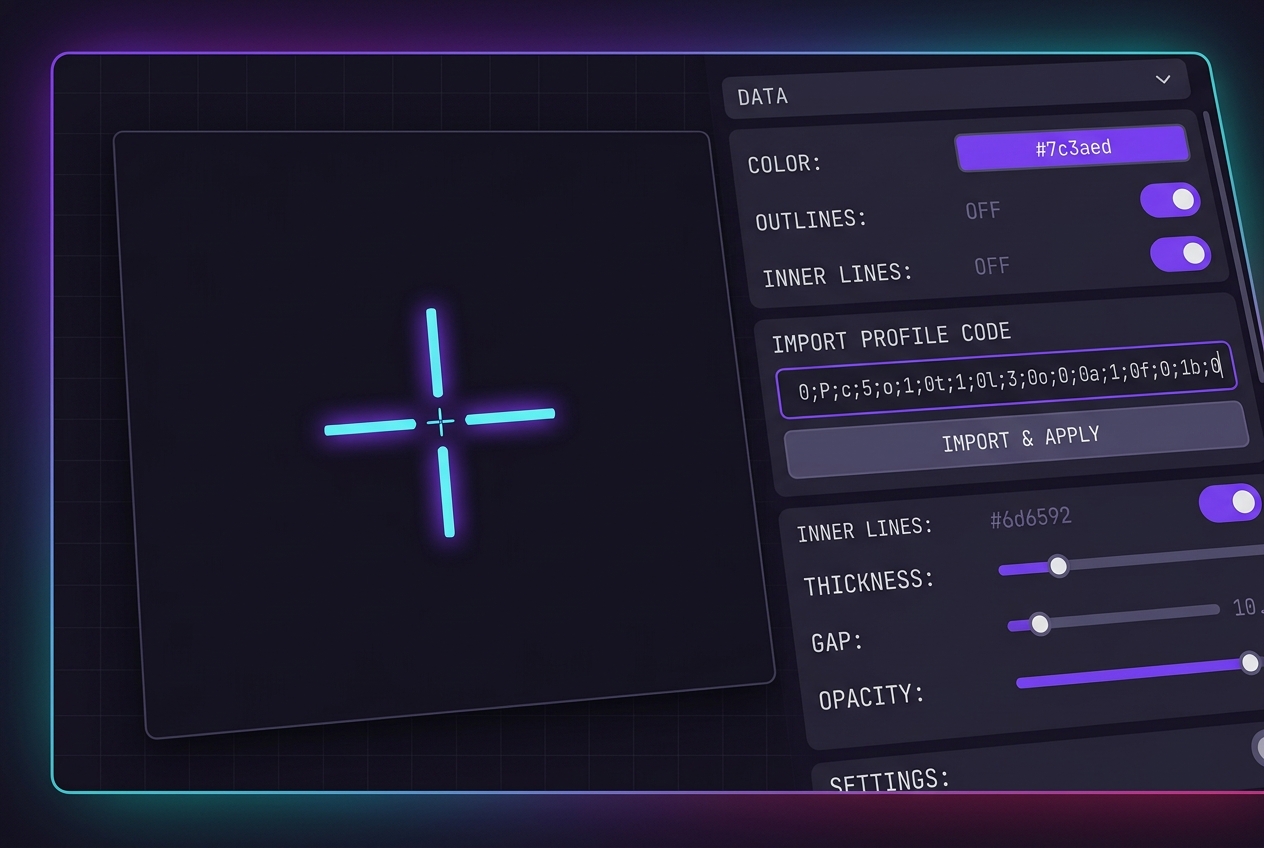
Importing a pro crosshair takes less time than a queue pop and is fully reversible. The fastest workflow: copy the crosshair code, open Settings, navigate to the Crosshair tab, use Import Profile Code, and save it as its own profile so you can swap without retyping. Do this once and A/B test styles across an entire session instead of vibing your way into inconsistent aim.

A blunt reality check: copying a pro crosshair is only worth it if you keep it stable long enough to build muscle memory. The best practical rule is to pick one crosshair for a full week of ranked or at least 20 matches, then change only one variable — color, line length, or dot — rather than jumping between entirely different shapes every few games.

Small, minimal inner lines encourage first-bullet focus. Crisp plus profiles stay readable under pressure. High-visibility green with a center dot supports fast entry pacing. Compact cyan offers instant recognition. Thin inner lines excel when anchoring pixel angles. Centered profiles support aggressive swings. Pink-tinted visibility with confident inner shapes stands out. Tight inner lines plus a center dot create a laser-pointer feel for disciplined bursts.

The trick is not to learn everything on every map. Pick one repeatable win condition per map — something you can execute even when comms are messy. For Haven, build a simple early-round info pattern like a safe A lobby ping or C long listen plus quick rotate cue. On Sunset, prioritize mid control protocols that do not require five people to coordinate perfectly.

On Breeze, tighten your discipline: long sightlines reward patient crosshair placement more than flashy movement. Summit demands frantic mid-round resets when a droppable wall changes the geometry. Each map has a timing structure you can exploit once you stop guessing and start drilling the same pattern until it becomes reflex.

Patch 13.00 rotated Fracture and Pearl out of Competitive and Deathmatch queues and ran a two-week on-ramp where Ranked Rating losses on Summit were reduced by 50% while wins still granted full RR. That matters because early in a map lifecycle, most lobbies are half-learning, half-guessing. Teams that win are not always those with better aim — they are the teams that adapt faster to new timings and new safe plant and retake patterns.

Patch 13.00 pushed the meta toward more structured play with meaningful Sentinel buffs including Cypher, Killjoy, Sage, and Deadlock, and reduced signature cooldowns for several Initiators. If you have felt a shift toward stronger site anchors and more punish-the-hit setups lately, you are not imagining it. The game rewards teams that gather info, slow the round down, and snap into decisive retakes.

Patch 13.01 continued tuning with targeted changes: Iso got a quality-of-life buff to weapon equip speed after unequipping Double Tap, Yoru Gatecrash active beacon duration increased from 15 seconds to 20 seconds, and the Outlaw was adjusted to add more recovery time and post-shot spread and recoil. Competitive integrity also got real attention with confirmed penalties for rank manipulation.


VALORANT crosshair settings import screen
Pro crosshair codes provide immediate visual consistency across clutch moments

Verified Pro Crosshair Codes

Eight current profiles from top-tier players, each optimized for different playstyles and visual preferences

Mid-2026 Pro Crosshairs

These eight verified pro crosshair codes were current in mid-2026 sources. Each code reflects a distinct style: minimal inner lines for first-bullet focus, crisp plus profiles for pressure moments, high-visibility colors for fast entry, compact shapes for instant recognition, thin lines for pixel angles, centered profiles for aggressive swings, and tight laser-pointer setups for disciplined bursts.

  1. aspas (MIBR) — 0;P;h;0;0l;4;0o;0;0a;1;0f;0;1b;0 — small, minimal inner lines for first-bullet focus
  2. Demon1 (Team Envy) — 0;p;0;s;1;P;o;1;f;0;0t;1;0l;3;0o;2;0a;1;0f;0;1b;0;A;o;1;0t;1;0l;3;0o;2;0a;1;0f;0;1b;0;S;c;1;o;1 — crisp plus profile, readable under pressure
  3. Zekken (MIBR) — 0;s;1;P;c;1;t;2;o;1;d;1;0b;0;1b;0;S;b;1;c;8;s;0.823 — high-visibility green with dot, strong for fast entry
  4. TenZ (Sentinels) — 0;s;1;P;c;5;o;0;f;0;0l;2;0v;2;0g;1;0o;1;0a;1;0f;0;1b;0 — compact cyan, classic instant-recognition reticle
  5. Chronicle (Team Vitality) — 0;P;h;0;f;0;0t;1;0l;4;0o;0;0a;1;0f;0;1b;0 — clean thin inner lines, great for anchoring pixel angles
  6. f0rsakeN (Paper Rex) — 0;p;0;c;1;s;1;P;h;0;f;0;s;0;0l;3;0v;3;0g;1;0o;0;0a;1;0f;0;1b;0;A;o;1;d;1;0b;0;1b;0;S;d;0 — disciplined centered profile, supports aggressive swings
  7. Jinggg (Paper Rex) — 0;s;1;P;c;8;u;FF99FFFF;o;1;b;1;f;0;0l;3;0o;2;0a;1;0f;0;1b;0;S;c;5;o;1 — pink-tinted visibility with confident inner shape
  8. ZmjjKK (Edward Gaming) — 0;P;h;0;d;1;f;0;0l;2;0v;2;0g;1;0o;1;0f;0;1b;0 — tight inner lines plus center dot, laser-pointer feel

Map Pool and Patch Context

As of late June 2026 updates, the active Competitive map rotation pool sits at seven maps: Ascent, Breeze, Haven, Lotus, Split, Summit, and Sunset. That is the list you should be drilling for ranked, Deathmatch, and Premier, because repetition is what turns knowing the default into punishing the timing. The map side is the hidden tax on everyone's consistency. Patch 13.00 released June 23, 2026, dropping Summit into Competitive and rotating Fracture and Pearl out of Competitive and Deathmatch queues. It ran a two-week on-ramp where Ranked Rating losses on Summit were reduced by 50% while wins still granted full RR. Early in a map lifecycle, most lobbies are half-learning, half-guessing, and the teams that win are not always those with better aim — they are the teams that adapt faster to new timings and new safe plant and retake patterns. Patch 13.00 also pushed the meta in a more structured direction with meaningful Sentinel buffs including Cypher, Killjoy, Sage, and Deadlock, and reduced signature cooldowns for several Initiators. The game is rewarding teams that gather info, slow the round down, and then snap into decisive retakes — especially on maps like Lotus and Sunset where mid-round reads matter.

Image

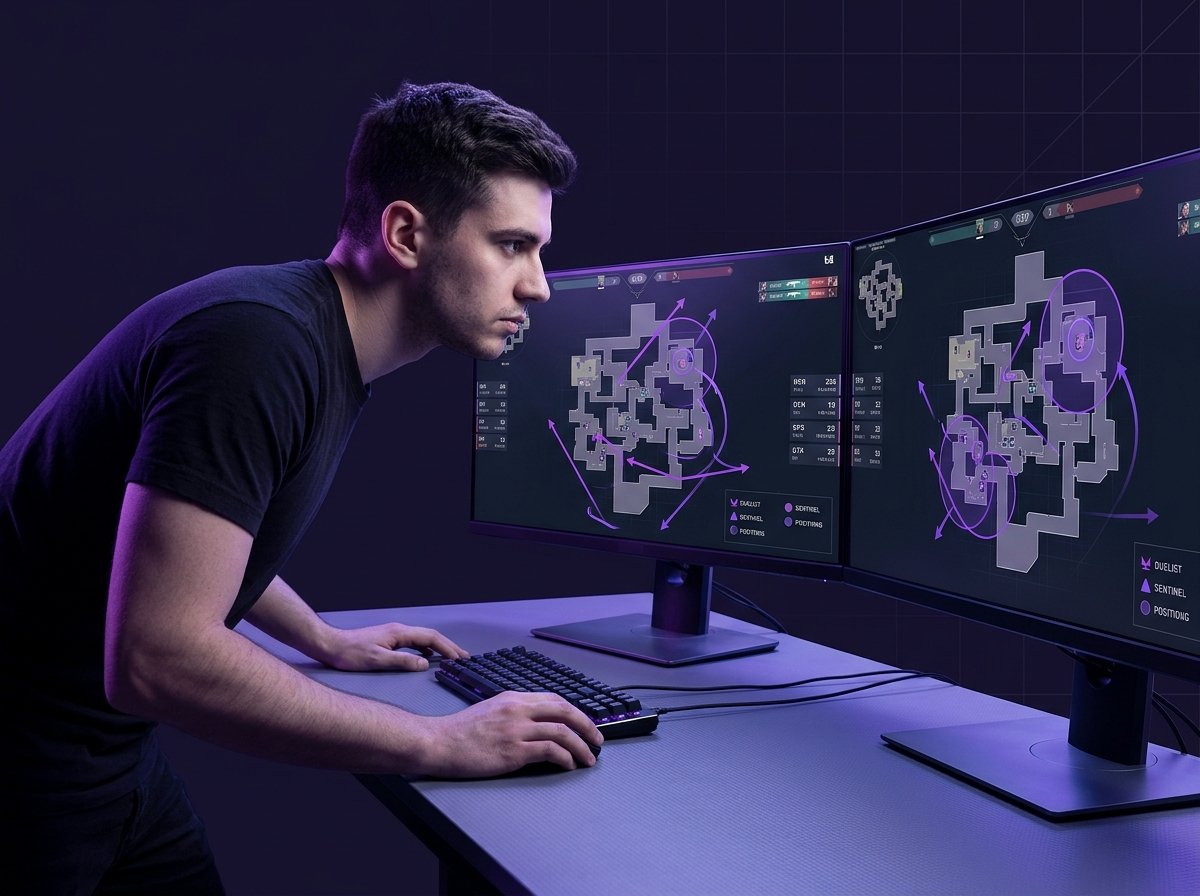
When following esports teams and players, the best viewing habit is not watching every match — it is watching with a single learning target. Pick one focus per session. Duelist players should track first-contact discipline: when stars like aspas, Zekken, Jinggg, f0rsakeN, or ZmjjKK choose to take space, and when they give it up to preserve utility for the hit. Sentinel players should study how they survive: the off-angles, the trip timing, the turret and alarm reposition windows, and the exact moment they stop fighting and start living.

Map-Specific Win Conditions

Build one repeatable pattern per map that you can execute even when comms are messy

Ranked Map Strategy

The trick is not to learn everything on every map. Pick one repeatable win condition per map — something you can execute even when comms are messy.

Haven and Sunset

For Haven, build a simple early-round info pattern: a safe A lobby ping or C long listen plus quick rotate cue. On Sunset, prioritize mid control protocols that do not require five people to coordinate perfectly. Focus on patterns you can repeat solo or with minimal coordination. These maps reward teams that gather early intel and make fast, confident rotates based on sound cues and timing windows rather than waiting for perfect five-player setups.

Breeze and Summit

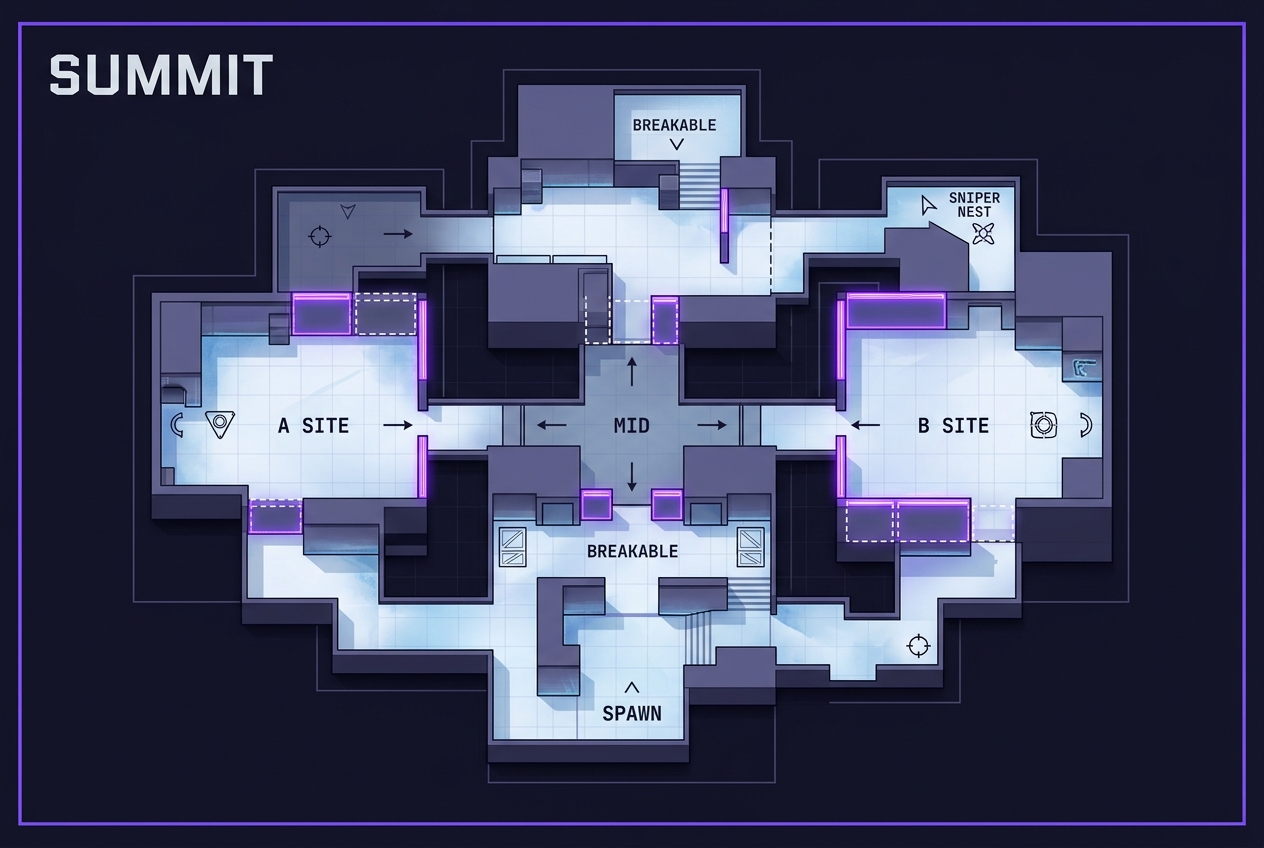
On Breeze, tighten your discipline: long sightlines reward patient crosshair placement more than flashy movement. Hold angles cleanly, trust your reticle, and do not overpush into trades you cannot win. Summit demands frantic mid-round resets when a droppable wall changes the geometry. Practice the wall-drop timing in custom matches so you can adapt your crosshair placement and rotate speed when the map opens up mid-round. Each map has a timing structure you can exploit once you stop guessing and start drilling the same pattern.

Lotus and Split

Lotus and Sunset reward mid-round reads more than pre-planned executes. On Lotus, focus on rotating doors and the three-site complexity: your default should prioritize flexible positioning that lets you collapse onto the hit site quickly. On Split, tight chokes and verticality mean disciplined utility usage and crossfire setups win more rounds than aim duels. Drill your smoke timings, your ropes, and your off-angle holds so you can punish aggressive pushes without exposing yourself to refrag trades.

Active Ranked Map Pool

  • Ascent — classic three-site control, mid dominance, strong retake potential
  • Breeze — long sightlines, patient crosshair placement, disciplined utility
  • Haven — three-site complexity, early info patterns, quick rotates
  • Lotus — rotating doors, flexible positioning, mid-round adaptability
  • Split — tight chokes, verticality, crossfire setups and off-angles
  • Summit — droppable wall geometry, frantic mid-round resets, new timings
  • Sunset — mid control priority, minimal coordination protocols, sound-cue rotates
VALORANT Summit map layout overview
Summit map features droppable wall geometry that changes mid-round sightlines

Practical Competitive Workflow

The July 2026 competitive snapshot is simple: pick a proven crosshair and stop changing it, build your comfort on the seven-map ranked pool of Ascent, Breeze, Haven, Lotus, Split, Summit, and Sunset, and treat patch days like mandatory homework — not optional trivia. Do that, and your mechanics will feel steadier, your mid-round calls will get sharper, and your results will finally look like your effort.

Imagine you are prepping for Premier playoffs. Patch 13.00 set Stage V26A4 matches to start July 1, with playoffs scheduled for August 15–16, and a Premier Score threshold of 600 for qualification in that stage. You do not need a perfect playbook — you need repeatable preparation. Use one pro crosshair for the whole stage, scrim or queue with two default executes per map, and re-read the latest patch notes before match day so you do not get blindsided by an agent or weapon tweak.

Crosshair codes are the most copy-paste-friendly pro habit in VALORANT because they remove variables. A clean reticle will not fix bad crosshair placement, but it will stop your UI from fighting you during the exact moments that matter: jiggle peeks on Breeze, micro-corrections through smoke edges on Ascent, or the frantic mid-round resets Summit demands when a droppable wall changes the geometry.

Importing a pro crosshair takes less time than a queue pop, and it is one of the few tweaks that is fully reversible. The fastest workflow is straightforward: copy a crosshair code, open Settings, go to the Crosshair tab, use Import Profile Code, and save it as its own profile so you can swap without retyping anything. Do that once, and you can A/B test styles across an entire session instead of vibing your way into inconsistent aim.

The blunt reality check: copying a pro crosshair is only worth it if you keep it stable long enough to build muscle memory. The best practical rule is to pick one crosshair for a full week of ranked or at least 20 matches, then change only one variable — color, line length, or dot — rather than jumping between entirely different shapes every few games.

mm

Sarah Mitchell

Esports Editor

Sarah specializes in RPG and strategy game reviews, bringing critical analysis and deep gameplay insights to GameFrame readers. Her background in game design gives her a unique perspective on mechanics and player experience.